Technical SEO and Core Web Vitals

I fix technical SEO and Core Web Vitals on Next.js and WordPress sites: LCP, CLS and INP, schema markup, sitemaps, redirects, security headers and Google Search Console. You get a site that feels instant and keeps its rankings.

What you get

  • Core Web Vitals audit with LCP, CLS and INP fixes
  • Caching, image, font and script optimisation
  • JSON-LD schema markup, sitemaps, canonical tags and meta titles
  • 301 redirect map from every legacy URL
  • Google Search Console, GA4 and Google Tag Manager set up and verified
  • Security headers such as CSP and HSTS configured
  • PageSpeed Insights and GTmetrix reports before and after
  • A short report of what changed and why

Who is this for?

Site owners whose WordPress site feels slow on a phone. Marketing teams planning a redesign or platform move who cannot afford to lose rankings. Agencies that need a technical SEO pass on a client build before launch. Anyone whose site fails a security header scan.

What do I build?

A technical audit and the fixes that follow. Core Web Vitals work on Largest Contentful Paint, Cumulative Layout Shift and Interaction to Next Paint: caching, image and font optimisation, removing heavy scripts and lean markup. Search foundations: JSON-LD structured data, generated sitemaps, canonical URLs, meta titles, a clean heading structure and 301 redirects from every legacy URL. Google Search Console and GA4 set up and verified, with Google Tag Manager for events. Security headers such as CSP and HSTS. I also de-index staging sites so they cannot compete with the live site in search.

How I build it

On WordPress: WP Rocket for caching, image optimisation at upload, lean builders such as Bricks, and Yoast or All in One SEO for metadata. On Next.js and TanStack Start: server rendering, route-level code splitting, structured data generated from the same content the pages render so it cannot drift, and sitemaps and llms.txt built at deploy. I use my own tools where they fit: Under1MB for image compression and the HTTP Security Header Scanner and plugin for headers. I measure on PageSpeed Insights and GTmetrix before and after and hand you the reports. I have written 75 articles on WordPress, Core Web Vitals, HTTP headers and SEO, including a 15-article series on security headers.

What does it look like in practice?

On Procol Development every page is server rendered on Next.js, with structured data, sitemaps and canonical URLs generated from the content each page renders. Ravens Ait Venue Website launched on Bricks with WP Rocket and every event page on one SEO heading structure. For the Aura Clips Agency Website I moved the domain to www, set up Search Console, GA4 and Tag Manager, and fixed indexing so the new site replaced the Framer one cleanly. On mohitgoyal.in AI Portfolio every legacy WordPress URL from Search Console has a 301 redirect and every page carries its own JSON-LD.

What results can you expect?

Ravens Ait reported a PageSpeed score of 94 or higher. Samko Holdings scored 96 on desktop and 90 on mobile after launch. Nortek reported 35 percent faster load times and Orilite 25 percent faster, as reported by those clients. Inspired Monks holds top Lighthouse performance scores despite running on Elementor.

Process

How this engagement runs

Audit: PageSpeed, Search Console, a crawl and a header scan of the site.

Prioritise: fixes ranked by impact on rankings and speed.

Fix on staging, then measure again on real devices.

Deploy with redirects and metadata checked page by page.

Monitor Search Console and Core Web Vitals for a few weeks after launch.

Proof

Projects built with this service

B2B SaaS

Procol Development

2024 – Present

procol.ai website on Next.js, TypeScript and Tailwind CSS, built and maintained by Mohit Goyal as Senior Web Developer, including the Procol Nexus 2026 summit page. Procol sells a procurement platform to enterprise buyers, and procol.ai is where prospects first meet the product. As Senior Web Developer I build and maintain the site: the product, solution, pricing, blog and campaign pages, and event pages such as Procol Nexus 2026. I built the site on Next.js with React, TypeScript and Tailwind CSS. Every page is server rendered, so the HTML arrives complete and pages load fast on phones. Pages are assembled from a shared library of typed components, so a new landing page reuses tested sections rather than starting from a blank canvas. The SEO foundations are built in: structured data, generated sitemaps, canonical URLs and optimised images, all generated from the same content the pages render so they cannot drift out of sync. Procol Nexus 2026 is Procol's invite-only summit for procurement, finance and IT leaders, and its page lives at procol.ai/nexus. It opens on a full-screen video hero that visitors scroll into, with Framer Motion carrying them from the opening frame into the event details and a registration form for invited guests. The video is treated as progressive enhancement, so the page stays usable while it loads. It runs on the same codebase as the rest of the site, so it is server rendered, indexable and on-brand without a separate microsite. The site is live at procol.ai, and I continue to ship new pages as the product grows. The lesson I keep coming back to: a campaign or event page does not need its own stack to feel special. Strong design, careful motion and fast server-rendered pages do the work. Thinking about moving a marketing site to Next.js, or launching an event page? Send me your next project and I will reply with a plan.

Next.js React TypeScript Tailwind CSS

Web app

Under1MB Image Converter

2026

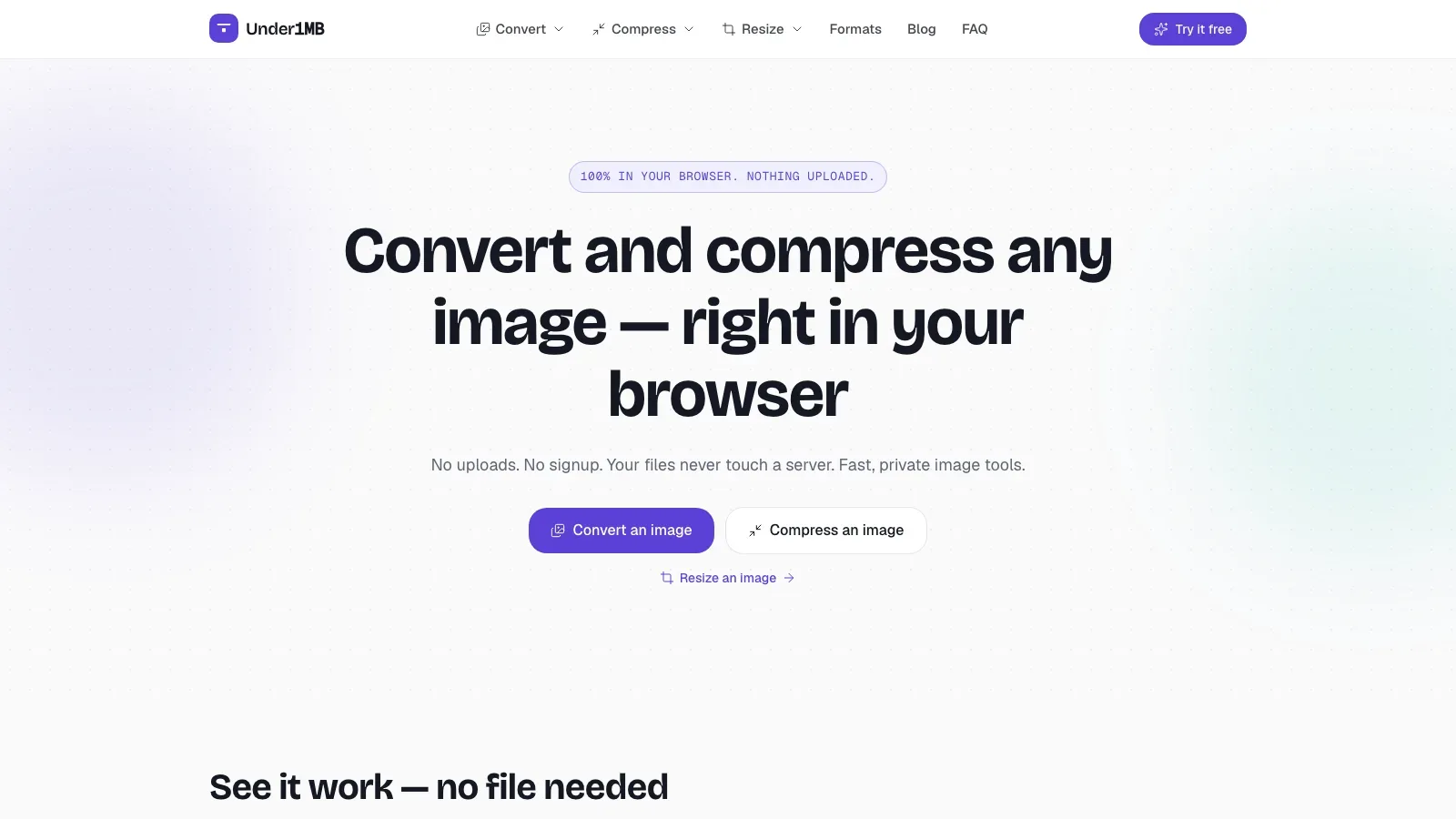
Under1MB is a free browser-based image converter and compressor built by Mohit Goyal in plain JavaScript: 11 formats, no uploads, no signup and no server. I built the product, the site and the branding myself, and launched it in public on LinkedIn. Most online image tools upload your files to a server, put a signup wall in front of the download and cap how many images you can process a day. For anyone who just needs a product photo under a size limit or a batch of screenshots converted, that is a lot of friction. It is also a privacy question they should not have to think about. I wanted a tool where the whole job happens on the user's own device, so there is nothing to upload, nothing to sign up for and no limit to enforce. Under1MB does exactly that. You drop a file, the browser decodes and re-encodes it, and the result is downloaded from memory. Nothing leaves the machine. It supports PNG, JPG, JFIF, WEBP, AVIF, GIF, BMP, ICO, HEIC, HEIF and SVG, so it covers the formats that come off phones and cameras as well as the ones the web wants. A target-size mode hits a chosen file size, such as under 1 MB. That is the use case the name comes from: upload forms and marketplaces that reject anything larger. Batch processing takes a folder of images and returns a ZIP, and a resize option handles the dimension side of the same problem. Every step runs locally, so large batches finish as fast as the device allows rather than waiting on a queue. The stack is deliberately plain: JavaScript, HTML and CSS, with no framework and no backend. Doing the encoding in the browser was the whole point. Keeping the app dependency-free keeps it fast to load and simple to maintain. The target-size mode works by iterating on quality until the output lands under the requested size. That is only practical because the encode loop runs on the user's hardware with no round trip. The absence of a server is also what makes the no-limit promise honest, since there is no cost per image for me to recover. I launched it in public on LinkedIn, where the launch post drew 45 reactions as reported on the post. The product is live at under1mb.app, and a Pro tier is planned. What I learned building it is that a strong constraint, in this case no server at all, makes product decisions easier. Every feature either works client-side or it does not ship, and that discipline produced a tool that is simpler than the alternatives it replaces. Have an idea for a small browser tool that respects its users? Send me the brief and I will reply with a plan.

JavaScript HTML CSS

Hospitality

Ravens Ait Venue Website

2025

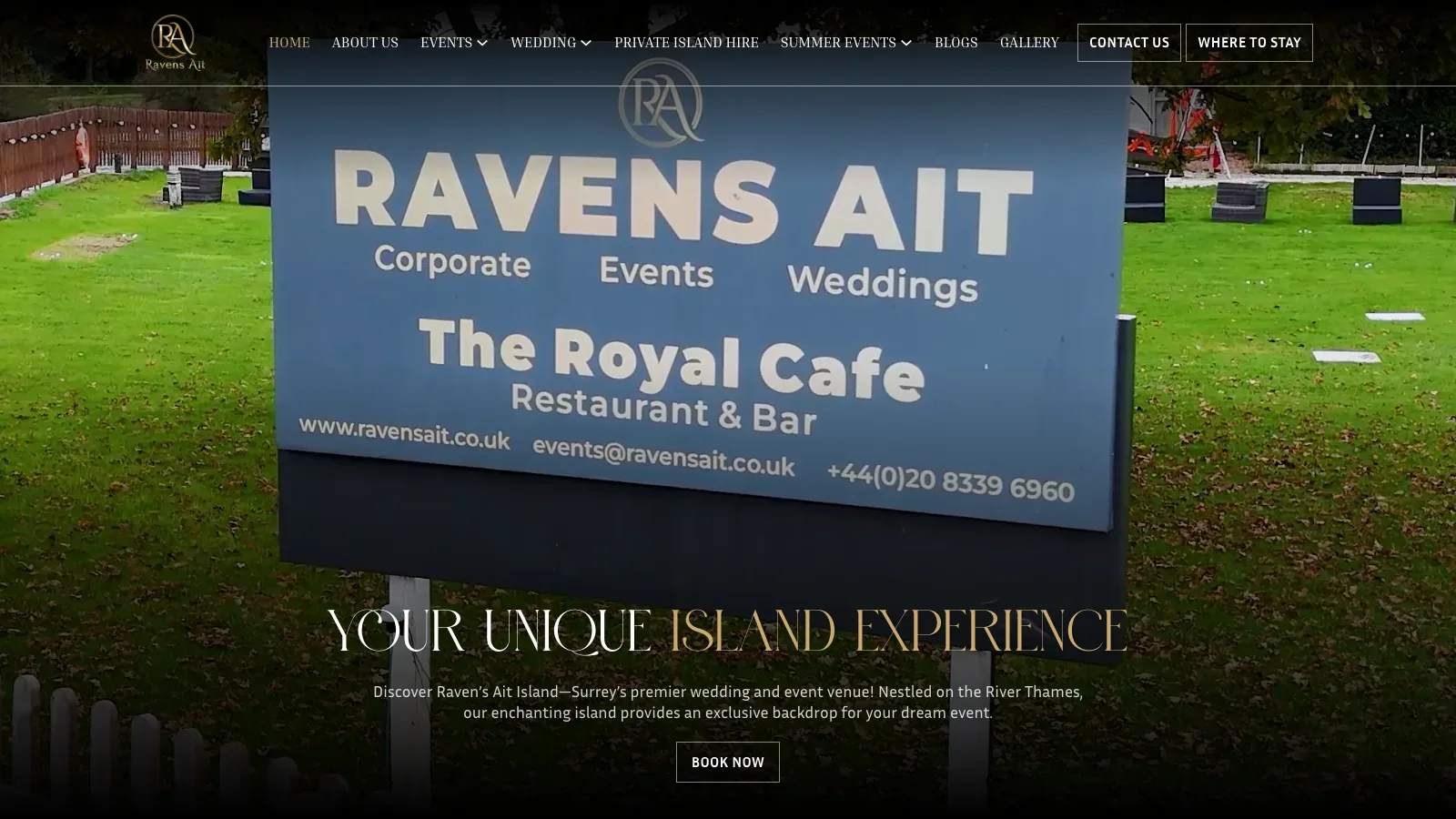
Ravens Ait venue website: WordPress and Bricks Builder build by Mohit Goyal for a Thames island venue, with 20+ event pages, Stripe bookings and HubSpot forms. It was built from scratch in 2025 through a London agency, scores 94 or higher on PageSpeed and has grown revenue pages since launch. Ravens Ait hosts weddings, christenings, private dining, corporate meetings and celebrations of life on a private island on the Thames near Kingston. The venue needed a site that reflected a luxury experience and converted browsers into enquiries. The brief asked for a luxurious light-gold palette, a sticky header, smooth non-intrusive animations, a quick availability call to action, an event-type carousel, an Instagram feed, case studies and testimonials. It also called for accessible contrast and a mobile-first layout. Working through a London agency, I built the full site from scratch on WordPress with Bricks Builder. The homepage has a video hero with Google-fetched reviews. There are nine event pages, including wedding sub-pages for Asian and European weddings, and eleven seasonal pages, from Holi to Boxing Day. All of them come from one Bricks template, so a new occasion is a content task rather than a build. Every event page follows one SEO heading structure: a single H1, three H2s for venue settings, catering and entertainment, H3s for FAQs, testimonials and the enquiry form, and an email subscription section. A gallery, blog templates with an author box, and a contact page with FAQs complete the core. Enquiry forms sync to HubSpot through Google Tag Manager, with mandatory fields so leads arrive complete. Later in 2025 I added revenue pages. A Wimbledon Tennis on the Island page has a date picker, per-date packages, Stripe payment through Forminator, customer and admin email templates, past dates disabled and a daily booking summary email. A Christmas 2025 page carries early-bird packages and a PDF flipbook menu. Dinner and Dance and Bollywood Student Night pages take Stripe bookings and share a combined promo popup. Bricks Builder was chosen over heavier builders because it produces lean markup. That is what made the PageSpeed target realistic on a page full of video and imagery. WP Rocket handles caching. The exit-intent popup is limited to once per 12 hours, with a scroll-triggered version on mobile, so it captures leaving visitors without nagging. HubSpot via Google Tag Manager keeps the CRM integration out of the theme code. Forminator with Stripe gave the venue paid bookings without a full e-commerce install. A cookie disclaimer and per-page SEO sections finished the build, followed by a QA pass that deduplicated card content and unified the sliders. The site has been live since April 2025 at ravensait.co.uk with a reported PageSpeed score of 94 or higher. The venue can now add a seasonal page or a ticketed event from templates, take payment on the page and see bookings summarised by email each day. The project taught me that one well-structured template, applied twenty times, is worth more than twenty bespoke pages. Run a venue that needs enquiry pages and ticketed events on one site? Send me your next project and I will reply with a plan.

WordPress Bricks Builder PHP Stripe

Related case studies and guides

Questions

Frequently asked

Can you speed up my existing WordPress site?+

Yes. Caching, image optimisation and removing heavy plugins usually bring the biggest gains.

Will a redesign lose my rankings?+

Not if URLs, redirects and metadata are handled. Before launch I map every old URL to its new home with a 301 and carry the metadata across.

Do you set up security headers?+

Yes. HSTS, CSP, X-Frame-Options and the rest, through my HTTP Security Header plugin on WordPress or server configuration elsewhere. My free scanner grades your site first.

Can you do technical SEO on a Next.js site?+

Yes. procol.ai and mohitgoyal.in both carry structured data, sitemaps, canonicals and redirects generated from the same content the pages render.

Do you write content or do link building?+

No. I do the technical side: speed, structure, metadata, schema and tracking. I can advise on heading structure and page templates that rank, as on Ravens Ait and Taxocity.

How much does a technical SEO audit cost?+

It depends on scope. Send me the brief, the pages or features you need and any design you have, and I will reply with a written scope and a quote.

Other services

Let's build

Have a site that needs to be fast, rank and convert?

Open to Work. Usually replies within a day.