Hospitality2025

Ravens Ait Venue Website

Ravens Ait venue website: WordPress and Bricks Builder build by Mohit Goyal for a Thames island venue, with 20+ event pages, Stripe bookings and HubSpot forms.

Timeline

2025

Stack

WordPressBricks BuilderPHPStripeForminatorHubSpotGoogle Tag ManagerWP Rocket

About the project

It was built from scratch in 2025 through a London agency, scores 94 or higher on PageSpeed and has grown revenue pages since launch. Ravens Ait hosts weddings, christenings, private dining, corporate meetings and celebrations of life on a private island on the Thames near Kingston. The venue needed a site that reflected a luxury experience and converted browsers into enquiries. The brief asked for a luxurious light-gold palette, a sticky header, smooth non-intrusive animations, a quick availability call to action, an event-type carousel, an Instagram feed, case studies and testimonials. It also called for accessible contrast and a mobile-first layout. Working through a London agency, I built the full site from scratch on WordPress with Bricks Builder. The homepage has a video hero with Google-fetched reviews. There are nine event pages, including wedding sub-pages for Asian and European weddings, and eleven seasonal pages, from Holi to Boxing Day. All of them come from one Bricks template, so a new occasion is a content task rather than a build. Every event page follows one SEO heading structure: a single H1, three H2s for venue settings, catering and entertainment, H3s for FAQs, testimonials and the enquiry form, and an email subscription section. A gallery, blog templates with an author box, and a contact page with FAQs complete the core. Enquiry forms sync to HubSpot through Google Tag Manager, with mandatory fields so leads arrive complete. Later in 2025 I added revenue pages. A Wimbledon Tennis on the Island page has a date picker, per-date packages, Stripe payment through Forminator, customer and admin email templates, past dates disabled and a daily booking summary email. A Christmas 2025 page carries early-bird packages and a PDF flipbook menu. Dinner and Dance and Bollywood Student Night pages take Stripe bookings and share a combined promo popup. Bricks Builder was chosen over heavier builders because it produces lean markup. That is what made the PageSpeed target realistic on a page full of video and imagery. WP Rocket handles caching. The exit-intent popup is limited to once per 12 hours, with a scroll-triggered version on mobile, so it captures leaving visitors without nagging. HubSpot via Google Tag Manager keeps the CRM integration out of the theme code. Forminator with Stripe gave the venue paid bookings without a full e-commerce install. A cookie disclaimer and per-page SEO sections finished the build, followed by a QA pass that deduplicated card content and unified the sliders. The site has been live since April 2025 at ravensait.co.uk with a reported PageSpeed score of 94 or higher. The venue can now add a seasonal page or a ticketed event from templates, take payment on the page and see bookings summarised by email each day. The project taught me that one well-structured template, applied twenty times, is worth more than twenty bespoke pages. Run a venue that needs enquiry pages and ticketed events on one site? Send me your next project and I will reply with a plan.

Gallery

Related projects

E-commerce

Whitfield Service Station Online Ordering

2025

WooCommerce online ordering for Whitfield Service Station in Dover, built by Mohit Goyal with a custom delivery radius plugin and cloud receipt printing. Three food brands on one forecourt now sell online for delivery and collection, and every order prints automatically in the kitchen. Whitfield Service Station is a forecourt in Dover that runs a Budgens store, a Fireaway pizza outlet and a doner and gyros kitchen. The owner wanted all three selling online without three separate systems. The catch was operational. Delivery had to stop at a sensible radius, fees had to reflect distance, orders had to reach the kitchen without staff watching a screen, and the store needed to switch ordering off when it closed. I built it on WordPress with Bricks Builder and WooCommerce. The shop has a three-brand landing with cards, per-brand category pages with a vertical category sidebar, a Budgens offers grid, combos, a My Account dashboard and a login and signup popup. Checkout is a multi-step Fluid Checkout with Stripe, Apple Pay and Google Pay. After the May 2025 feedback round I made the homepage e-commerce first, with dynamic featured, promotion and bestseller sections and brand cards with real product photography and Order Now buttons. I also audited the Fireaway and doner catalogues against their Just Eat menus. My custom Delivery Restriction Checker plugin geocodes the customer's address with the Google Maps API, hides delivery beyond 10 miles, charges a distance-based fee and falls back to pickup or dine-in. The delivery fee later became a flat fee, and cash on delivery was disabled. WooCommerce Product Add-Ons handle toppings and variations. A CSV import template with tutorial videos lets staff manage the menu. An 18+ confirmation covers alcohol and vapes, an opening-hours popup and WhatsApp float sit on the front end, and the owner can close the store or set hours from the admin. Food hygiene ratings and GDPR, privacy and terms pages round it out. The point-of-sale link is the piece that makes it work day to day. Orders print automatically to an Epson receipt printer through PrintNode, with order alerts in the WooCommerce mobile app, so the kitchen never has to check a dashboard. Writing the delivery logic as my own plugin rather than configuring a shipping extension was deliberate. The geocoding, radius and fee rules were specific enough that a bespoke plugin was smaller and easier to change than a general product, as the later switch to a flat fee showed. Bricks keeps the theme light, WP Rocket handles caching, and All in One SEO covers search. A W3C validation and performance report closed phase one in August 2025, with staff documentation covering price changes, reports, reprinting receipts, cancelling orders and hours. The platform is live at whitfieldservicestation.co.uk. The three outlets take online orders through one checkout, and staff manage the menu and the printer without a developer. The project confirmed that in food ordering the printer integration is the feature that decides whether the system gets used. Planning a similar online ordering store for a takeaway or forecourt? Send me your next project and I will reply with a plan.
WordPress WooCommerce Bricks Builder PHP

Hospitality

Warren House Hotel Homepage

2025

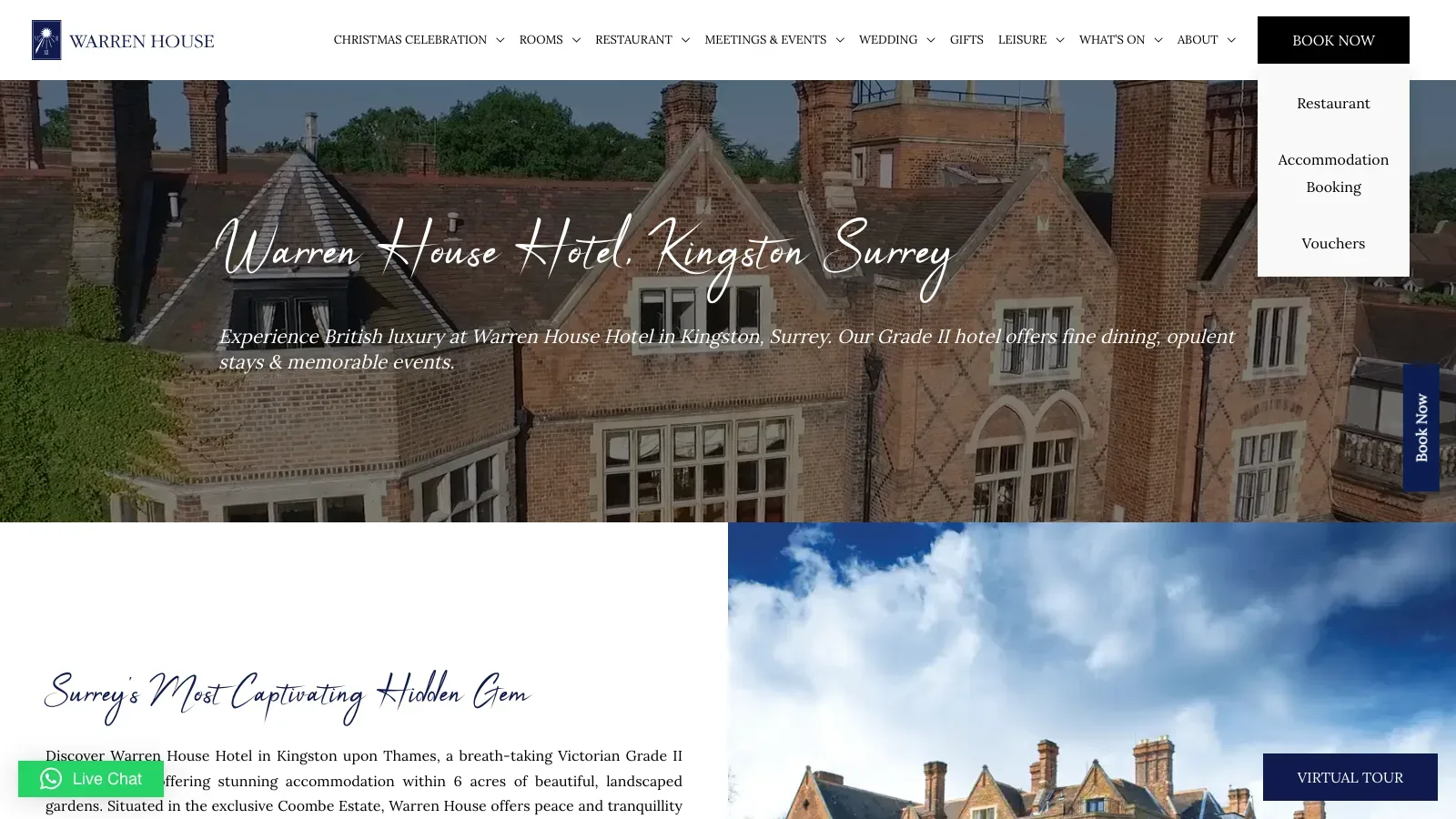
Warren House homepage: new Elementor Pro homepage by Mohit Goyal for a Kingston hotel and wedding venue, with video hero, rooms first and Google reviews. The work replaced the entry point of an existing WordPress site rather than rebuilding it, and was delivered through a London agency in 2025. Warren House is a country-house hotel and wedding venue in Kingston upon Thames. Its WordPress site worked, but the homepage did not present the hotel the way high-end venue sites do. Rooms were buried below marketing content, and a HubSpot popup the marketing team relied on was not firing. A full redesign had been discussed. The brief was to deliver the homepage and the fixes that mattered now without committing to the wider project. In July 2025 I added a blog listing and first post to the existing site and diagnosed the HubSpot popup that was not firing. In September I built a new homepage on Elementor Pro. It has a full-width video hero, subtle scroll animations in the style of high-end hotel sites, and rooms placed first in the page order so the booking path is immediate. Reviews are fetched from Google so social proof stays current without manual updates. A new header and footer are responsive across breakpoints. I also built a Wedding Fair popup that appears after five seconds to promote the event, and fixed a legacy popup whose close button did not work, which had been quietly frustrating visitors. Elementor Pro was the existing platform, and building the homepage there meant the hotel's team could keep editing with the tools they knew. The animations were kept subtle and scroll-linked so they add polish without hurting load time on a page that opens with video. Pulling reviews from Google rather than pasting quotes avoids a page that goes stale. HubSpot stayed as the popup and lead tool because the hotel's marketing already ran through it. Fixing the existing popups was cheaper than replacing them. A 24-page site plan was scoped and quoted, with the wider redesign currently on hold, so this project covers the homepage and supporting fixes rather than a full rebuild. It was a freelance project through a London agency, and the homepage is live at warrenhouse.com. The hotel now has a front page that leads with rooms and reviews, a working popup programme for events like the wedding fair, and a blog it can publish to. The project showed me that a homepage and a few well-chosen fixes can deliver most of the visible benefit of a redesign while the larger decision waits. Need a hotel or venue homepage that leads with rooms and reviews? Send me your site and I will reply with a plan.

WordPress Elementor Pro PHP HubSpot

Hospitality

Raasa Restaurant Landing Page

2025

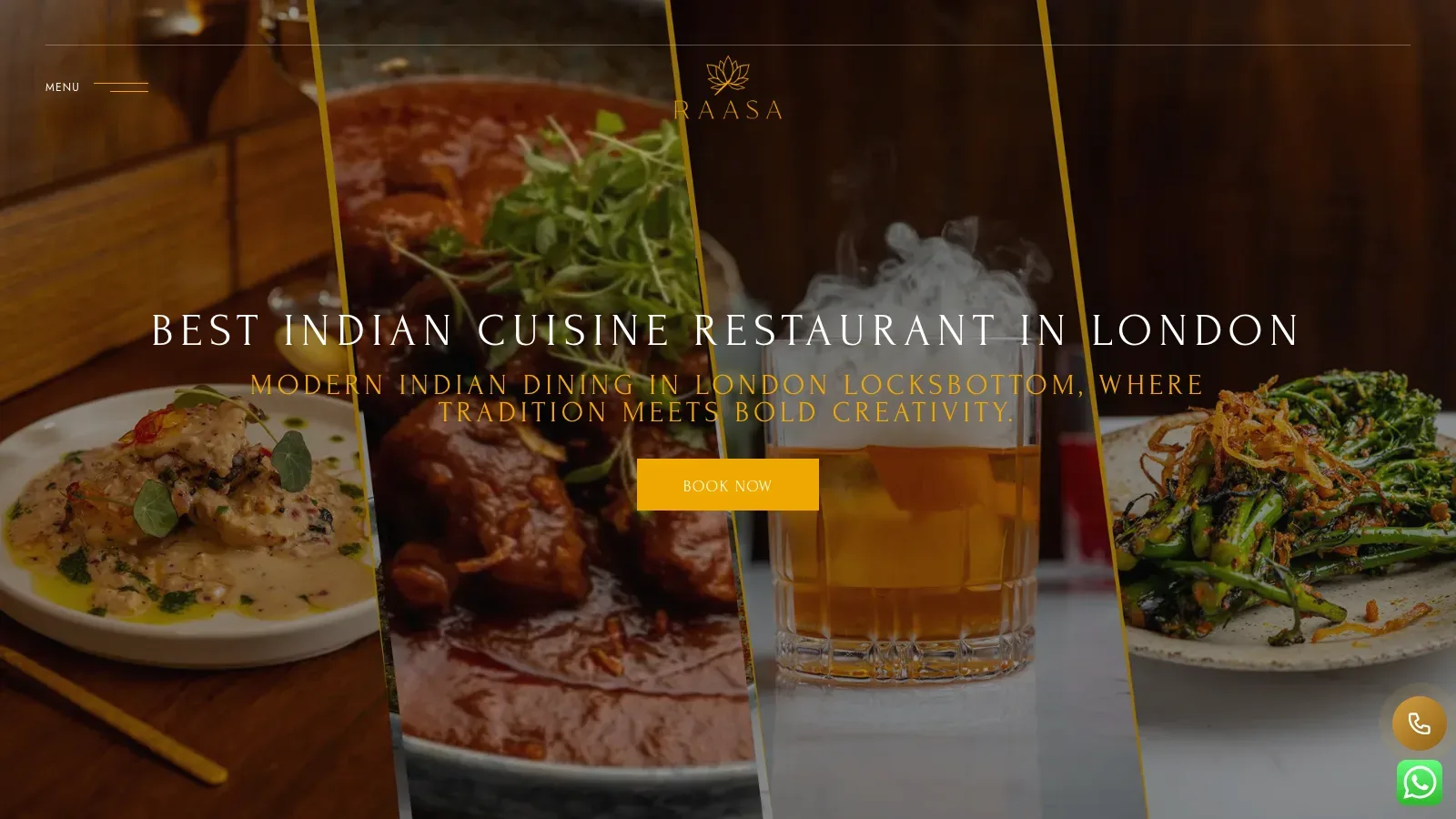
Raasa Restaurant landing page: a coming-soon site for a Locksbottom Indian restaurant, built overnight by Mohit Goyal on WordPress and Elementor and put live. It turned a mismatched theme demo into a clean launch page before the restaurant opened. Raasa is an Indian restaurant in Locksbottom, Orpington. It needed a presence online before opening so that early customers could find it, read about the kitchen and leave an email address. The agency had a horizontal-scroll theme demo that did not fit a restaurant, and the deadline was the next morning. The brief was simple but tight: one page, live on the real domain, by the time the client checked in. On 8 and 9 April 2025 I converted the demo into a one-page landing. It has a hero, an About Raasa section with the head chef's biography, a menu teaser, an email sign-up and a map. Converting the demo meant fixing the theme breakage that came with removing its horizontal scroll. I stripped the sections that did not apply and rebuilt the remaining ones as a vertical page. I also removed the unused WooCommerce install the demo had brought along. It had no place on a coming-soon page and only added weight and attack surface. The same night I migrated the page from staging to the live domain, so the restaurant woke up with a working site on its own address. Elementor was the right tool for a page that had to exist by morning and that the agency would edit later. Keeping WordPress rather than a static page meant the site could grow into a full restaurant site, with menus and bookings, without migrating again. Removing WooCommerce and the unused theme parts kept the page light. That matters for a site most people open on a phone while deciding where to eat. Later in 2025 I installed Google Tag Manager so the agency could add analytics and tracking without further code changes. I added opening hours to the footer once the restaurant had fixed them. The page is live at raasarestaurant.co.uk. The restaurant had an online presence before opening day, collected sign-ups from the start and now has a WordPress base that can be extended as the business grows. It was a small project, but a good example of turning a mismatched theme into a clean launch page under time pressure. Knowing what to delete is often the fastest route to a finished site. Opening a restaurant and need a launch page by a fixed date? Tell me the date and I will reply with a plan.

WordPress Elementor PHP Google Tag Manager

Let's build

Have a site that needs to be fast, rank and convert?

Open to Work. Usually replies within a day.