Web app2024 – 2025

Free Tools on Inspired Monks

Free Tools on Inspired Monks: three free browser tools built by Mohit Goyal on inspiredmonks.com, an AI proposal generator, a GST-ready invoice generator and an HTTP security header scanner.

Timeline

2024 – 2025

Stack

JavaScriptPHPWordPressLLM APIREST APIPDF generation

About the project

I built these between 2024 and 2025 for freelancers, small businesses and site owners. Each one does a single job, needs no account and keeps the user's data on their own device wherever it can. The AI Proposal Generator turns a few client details into a complete proposal. An LLM (large language model) drafts the executive summary, scope of work, timeline and about sections. Five templates and a tone switch set the style, a live editor allows changes before export, and pricing tables handle taxes, discounts and INR, USD and EUR. Drafts auto-save on the device and export to PDF or DOCX. It is live at inspiredmonks.com/proposal-generator. The Free Invoice Generator produces tax-correct invoices for Indian and global businesses. It switches tax fields by currency: IGST, CGST, SGST and CESS for INR, sales tax for USD and VAT for EUR and GBP, across more than 150 currencies, with logo upload, drag-and-drop line items and a clean PDF download. Everything runs and saves in the browser, so there is no account, no email capture and nothing stored on a server. It is live at inspiredmonks.com/invoice-generator. The HTTP Security Header Scanner grades any website from A+ to F. A PHP REST endpoint on WordPress fetches the response headers server-side, because a browser cannot read another site's headers, and a JavaScript frontend scores HSTS, Content-Security-Policy, X-Frame-Options, X-Content-Type-Options, Referrer-Policy and Permissions-Policy. Each finding explains what the header protects against, gives a step-by-step fix and links to my 15-article series on security headers and my WordPress plugin. It is live at inspiredmonks.com/http-security-header-scanner. No usage metrics are measured for these tools. Together they show the kind of small, focused web app I build: one screen, no sign-up, and a finished result in about a minute. Need a calculator, generator or diagnostic tool that runs in the browser? Send me the idea and I will reply with a plan.

Gallery

Related projects

Real estate

PropAlert Real Estate Website

2024

PropAlert WordPress website for an Indian real estate data platform, built by Mohit Goyal with custom plugins and OTP phone verification wired into WPForms. The engagement ran from July to August 2024 as a freelance project, and the site is live at propalert.in. PropAlert helps home buyers track under-construction projects and avoid stalled developments. The site claims coverage of 57,000 developers in 44 cities and partnerships with 200 banks and institutions. The problem it solves is unfamiliar to most buyers, so the site had to explain it clearly before asking for anything. It also had to capture leads that the sales team could act on and take payments. Lead quality mattered. An enquiry with a wrong or fake phone number is worth nothing to a business that follows up by phone. I built the site on WordPress with a custom theme. The pages use long-form sections for buyer pain points, how the service works, media coverage and videos. A first-time visitor understands the problem and the product before reaching a form. I built Pay Now and Enquire Now flows for the two actions the business wanted. Because lead quality mattered, I wrote custom plugins and connected WPForms to an OTP (one-time code) API, so every enquiry comes with a verified phone number before it reaches the team. The stack was WordPress, PHP, WPForms, a REST API and JavaScript. A custom theme rather than a builder gave me control over the long-form layout and kept the page weight down. WPForms was kept as the form layer because the team already knew it. The verification was added around it with custom plugins and the OTP API rather than replacing it, so the team's workflow did not change. JavaScript handles the OTP step in the form itself, so the visitor verifies their number without leaving the page. The custom plugins keep the verification logic separate from the theme, so a theme change later does not touch the lead flow. No traffic or conversion metrics were measured for this work. The team can now trust that every enquiry has a verified phone number, take payments through the site, and edit the explanatory content as the product grows. The site is live at propalert.in. Getting fake phone numbers through your lead forms? Send me your next project and I will reply with a plan for verified enquiries.

WordPress PHP WPForms REST API

Web app

Humora AI Rewriting Tool

2026

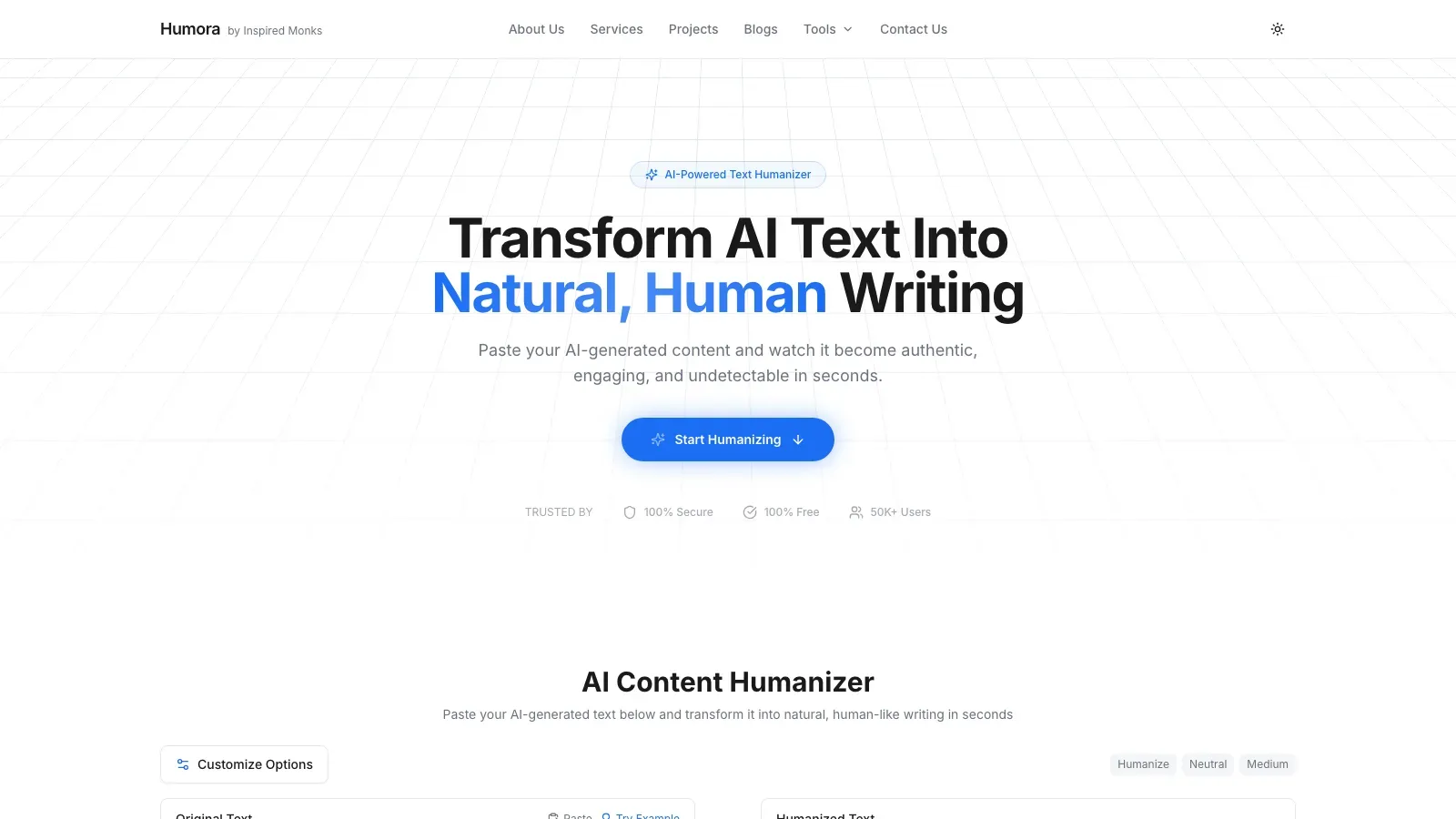
Humora is a free AI rewriting tool by Mohit Goyal in JavaScript on an LLM API: it rewrites drafts in five writing modes with tone controls, 12 languages and a diff view. I launched it in February 2026 under my Inspired Monks brand, with a companion article on inspiredmonks.com, and it is live at humora.inspiredmonks.com. A first draft often reads stiff, and the writing tools that help charge a monthly fee for what is, at its core, a well-prompted rewrite. I wanted a free alternative good enough to use every day. It had to let the writer control the voice of the result rather than accept one house style, and show its work so the writer could see what changed and why. You paste up to 500 words and choose a writing mode, from Academic and Business to Creative and Social Media. You pick one of five tones and one of three rewriting strengths, and the result streams back word by word. Extras include translation into 12 languages, a readability simplifier that brings text to an eighth-grade level, grammar fixes, and a before-and-after diff that explains each change. Drafts auto-save, so a page refresh does not lose work. Each control changes the request rather than adding a step, so the whole tool stays on one screen. The frontend is a streaming JavaScript interface in HTML and CSS, backed by an LLM (large language model) API. Streaming was the main technical choice. Showing the rewrite as it arrives makes a several-second generation feel immediate and lets the writer start reading before it finishes. The mode, tone and strength controls are composed into the request rather than offered as separate tools, which keeps the interface to one screen. The diff view is computed on the client against the original text, so the explanation of changes does not need another round trip. The 500-word limit keeps each request small enough to stream quickly and keeps the service free to run. No usage metrics are measured for this project. Anyone can now take a stiff draft and get a clearer version in their chosen register and language, with every change visible, for free and without an account. Humora is live at humora.inspiredmonks.com. Want an AI writing tool of your own with streaming output and a clean interface? Send me the idea and I will reply with a plan.
JavaScript LLM API HTML CSS

Web app

Under1MB Image Converter

2026

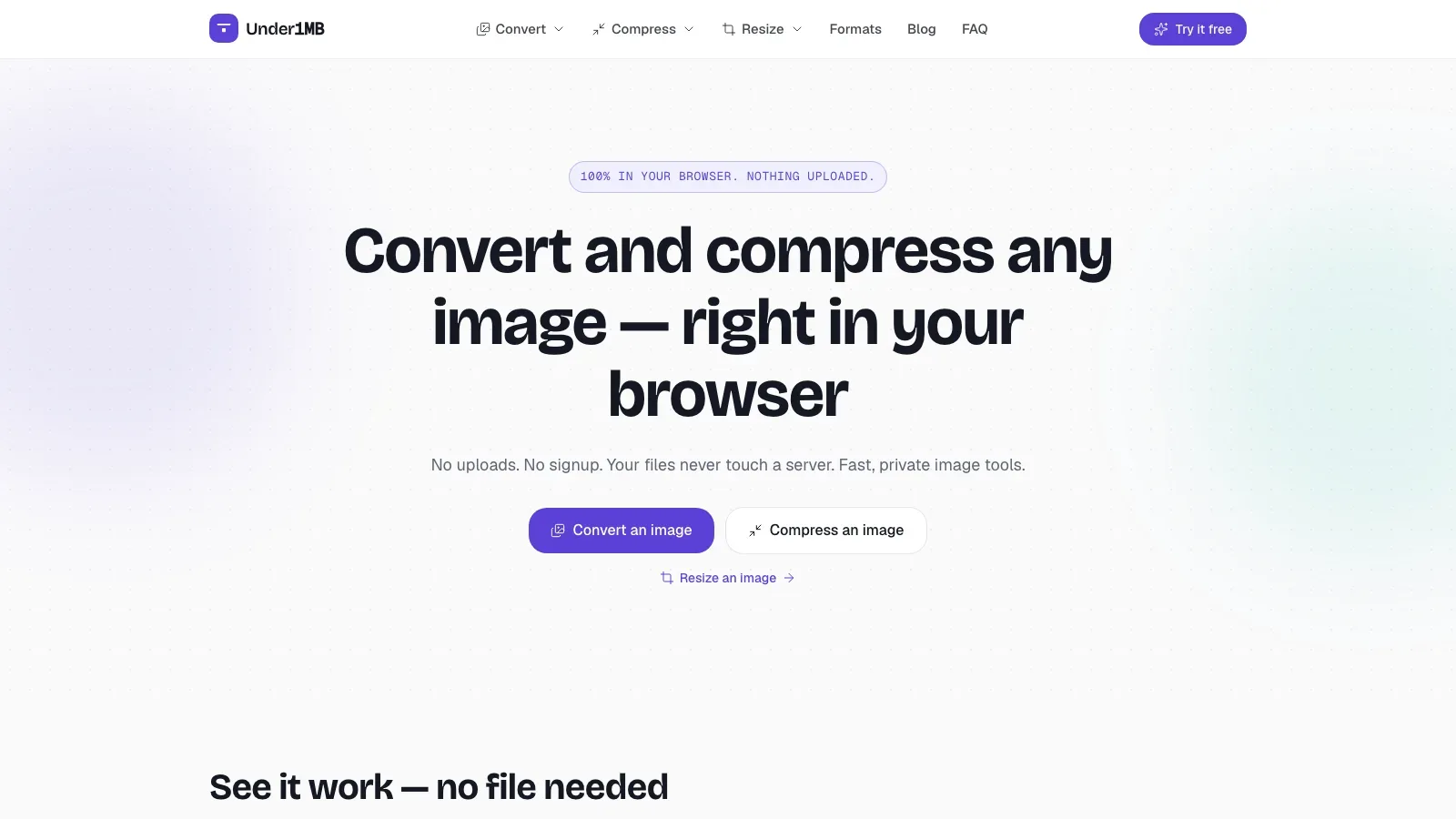
Under1MB is a free browser-based image converter and compressor built by Mohit Goyal in plain JavaScript: 11 formats, no uploads, no signup and no server. I built the product, the site and the branding myself, and launched it in public on LinkedIn. Most online image tools upload your files to a server, put a signup wall in front of the download and cap how many images you can process a day. For anyone who just needs a product photo under a size limit or a batch of screenshots converted, that is a lot of friction. It is also a privacy question they should not have to think about. I wanted a tool where the whole job happens on the user's own device, so there is nothing to upload, nothing to sign up for and no limit to enforce. Under1MB does exactly that. You drop a file, the browser decodes and re-encodes it, and the result is downloaded from memory. Nothing leaves the machine. It supports PNG, JPG, JFIF, WEBP, AVIF, GIF, BMP, ICO, HEIC, HEIF and SVG, so it covers the formats that come off phones and cameras as well as the ones the web wants. A target-size mode hits a chosen file size, such as under 1 MB. That is the use case the name comes from: upload forms and marketplaces that reject anything larger. Batch processing takes a folder of images and returns a ZIP, and a resize option handles the dimension side of the same problem. Every step runs locally, so large batches finish as fast as the device allows rather than waiting on a queue. The stack is deliberately plain: JavaScript, HTML and CSS, with no framework and no backend. Doing the encoding in the browser was the whole point. Keeping the app dependency-free keeps it fast to load and simple to maintain. The target-size mode works by iterating on quality until the output lands under the requested size. That is only practical because the encode loop runs on the user's hardware with no round trip. The absence of a server is also what makes the no-limit promise honest, since there is no cost per image for me to recover. I launched it in public on LinkedIn, where the launch post drew 45 reactions as reported on the post. The product is live at under1mb.app, and a Pro tier is planned. What I learned building it is that a strong constraint, in this case no server at all, makes product decisions easier. Every feature either works client-side or it does not ship, and that discipline produced a tool that is simpler than the alternatives it replaces. Have an idea for a small browser tool that respects its users? Send me the brief and I will reply with a plan.

JavaScript HTML CSS

Let's build

Have a site that needs to be fast, rank and convert?

Open to Work. Usually replies within a day.